Build Log · Prototype
Into the foam
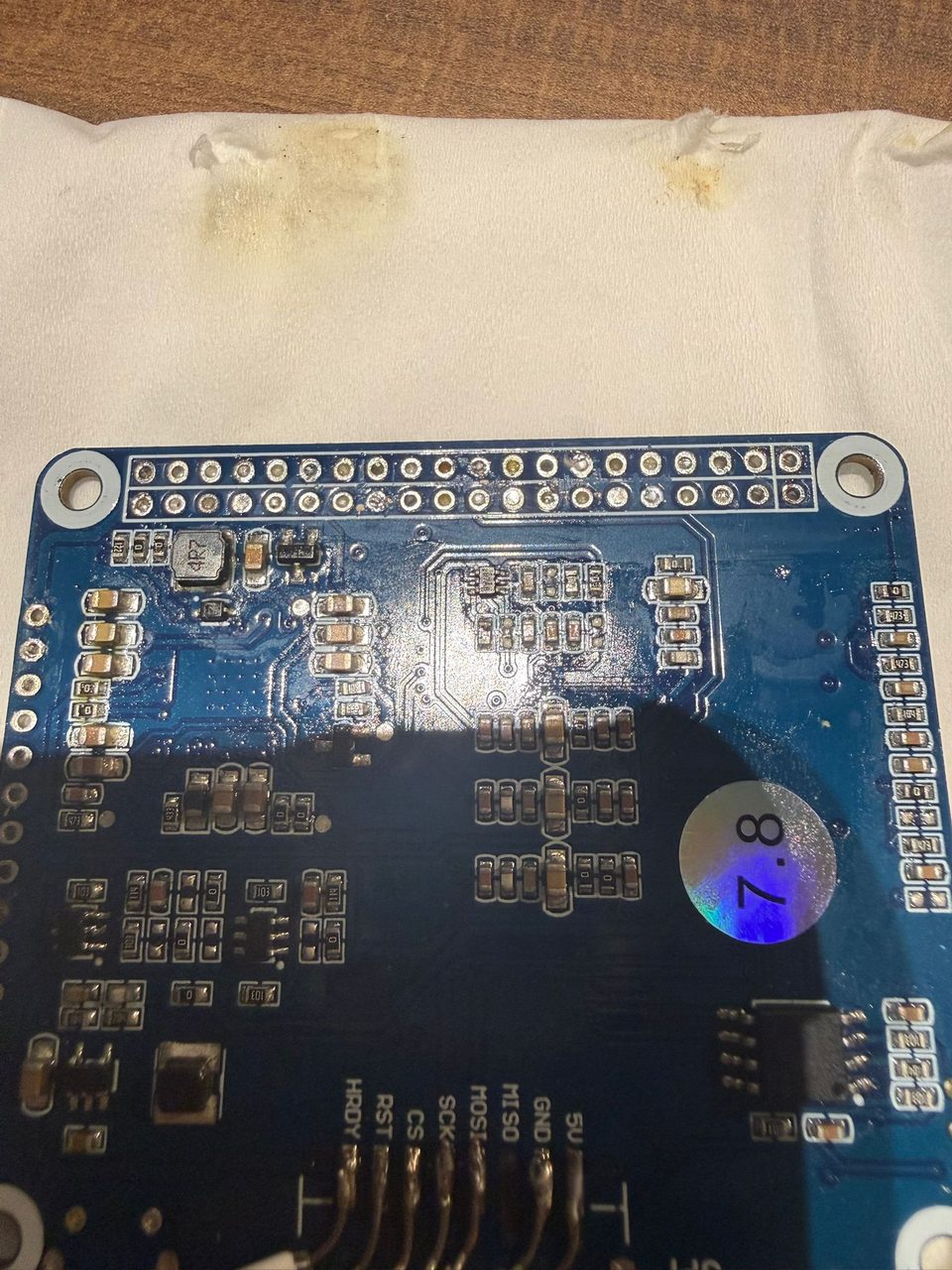
The first "enclosure" was a scrap of white packing foam, the kind a monitor ships in. The working guts of the panel went straight into it, held down with a smear of hot glue, eight wires soldered right onto the board's bare pads. No case, no bracket. Foam, because foam was on the desk and aluminium wasn't.
Why solder straight to the pads
The driver board breaks the SPI bus out to a tidy keyed connector, and most of the time you'd use it. But during bring-up that connector is one more thing that can wiggle loose, and a single flaky contact on the clock or the host-ready line gives you a panel that mostly works. That's much harder to debug than one that's plain dead. So for the bench build I went the other way and soldered the harness straight onto the unpopulated header pads. Ugly, permanent, rock solid. After that, when a refresh smeared, I knew it was my firmware and not a loose wire.
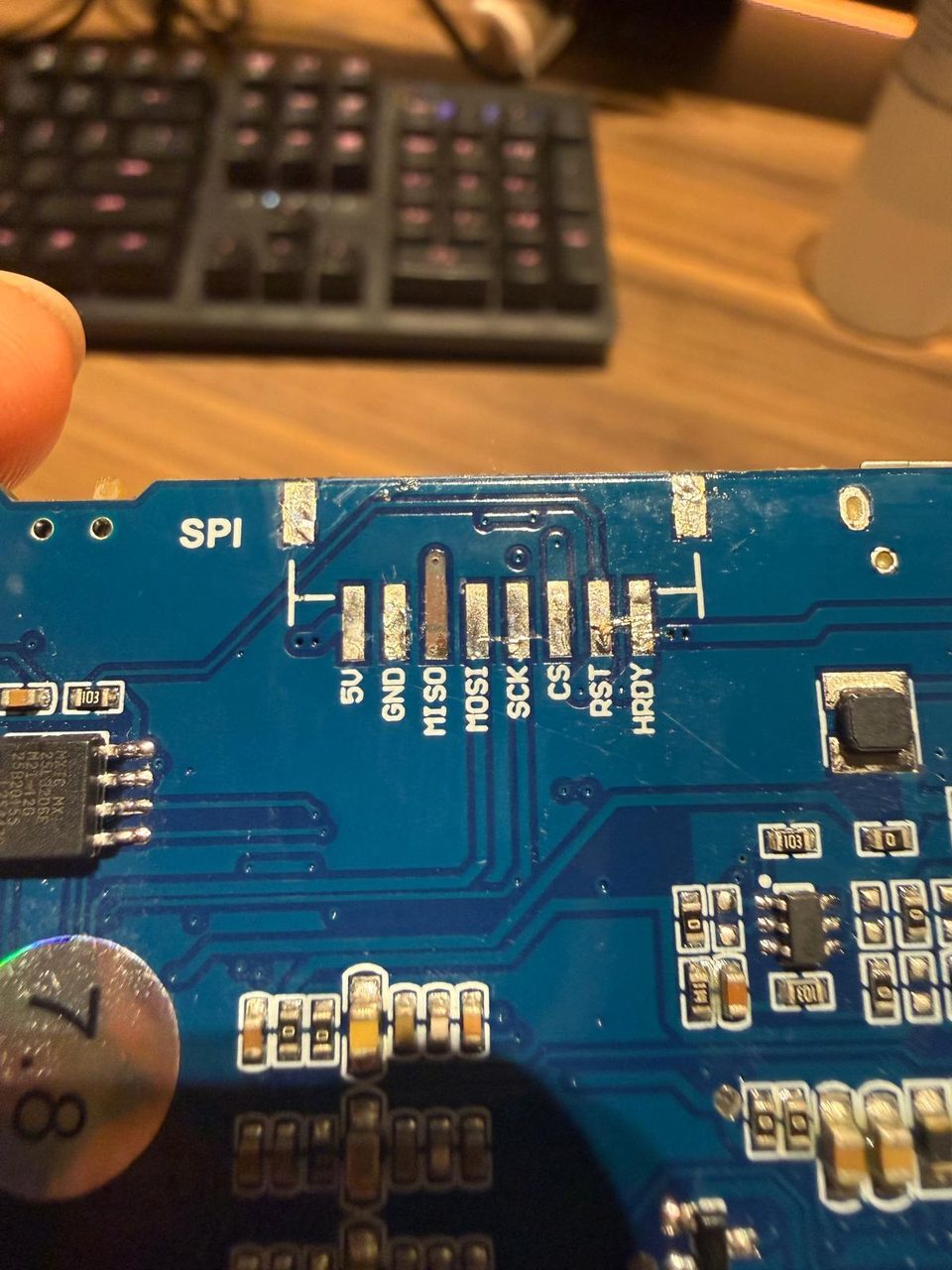
Rough on purpose
The foam wasn't precious, and that turned out to matter. I could shove the board around, prop the panel at any angle, cut a new slot with a craft knife when the wiring changed. Nothing about it was committed, so nothing about it slowed me down. It kept me honest, too. You can't hide a hot chip or a flexing board inside a block of foam the way you might inside a glossy shell. If it ran warm, you felt it. If a wire was under strain, you could see it.
The plan from here is the opposite of foam in every way: one block of machined aluminium, dense and cool, built to sit out for years. I've written about why elsewhere. But the foam earned its spot in the story. It's the body that proved the electronics before there was anything nice to put them in. The unit today is still the black prototype, and the aluminium is the direction, not the thing it's sitting in right now. When the milled shells arrive, this is what they replace.